

Factors influencing sealing element failure
20
2024.8
Author
610
Read volume
Sealing is to prevent the leakage of gas, fluid or solid particles from adjacent joint surfaces. Usually, we use the method of installing sealing elements to ensure the tightness of the machine. Good sealing can prevent the leakage of gas and fluid, save industrial production and transportation. Loss, it can also avoid the leakage of corrosive liquids and solid particles leading to corrosion failure of metal parts and ensure the stability of machine operation. However, if the selection is wrong, or the sealing element is improperly operated when using and installing it, it may accelerate the damage and failure of the sealing element. In order to extend the service life of the sealing element, we need to find the cause of the damage to the seal and "prescribe the right medicine".
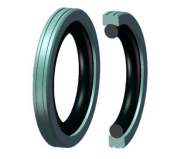
1. Working medium
During the selection stage of sealing elements, we need to consider whether the sealing elements will be corroded by the working medium or other substances in the working environment. Therefore, we generally use oil-resistant materials for gasoline, lubricants, synthetic oils, hydraulic oils and other sealing materials, such as fluororubber, nitrile rubber, polyacrylate, polytetrafluoroethylene, nylon, polyoxymethylene, etc. In addition, it is also necessary to pay attention to the cleanliness of the medium to avoid tiny particles in the medium scratching the surface of the seal and affecting the sealing effect.
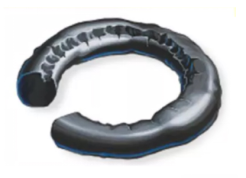
Corroded sealing ring
2. Working temperature
For the sealing element, changes in working temperature may cause it to undergo deformation such as thermal expansion and contraction, thereby reducing its sealing performance; too high working temperature may accelerate the aging of the sealing element, reduce its service life, and even seals of some materials (such as fluoroelastomer operating temperature range from-20to200℃, ethylene propylene rubber operating temperature range from-50to150℃, etc.) will harden rapidly at high temperatures exceeding the working temperature and crack, resulting in seal failure. If the operating temperature changes greatly, polytetrafluoroethylene (working temperature range from-55 to 260℃) or soft copper alloy (working temperature up to300℃) can be used as the raw material for the seal.
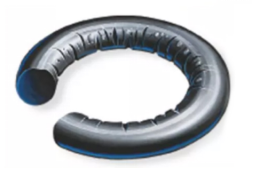
The working temperature is too high
3. Working pressure
When other working conditions are the same, the higher the working pressure, the more likely the seal will fail. Under long-term high working pressure, the seal is more likely to deform, which affects the sealing effect. When the working pressure is high, we can use high-strength materials such as rubber and plastic glue and polyurethane for sealing the high-pressure system; sincethe working pressure of the O-ring is32MPa, and the working pressure of the rectangular seal ring is50MPa, rectangular seal rings can be used for working environments with high pressure. It should be noted that if the working pressure exceeds 10MPa in daily work, a retaining ring needs to be installed to prevent the seal ring from being squeezed into the seal gap and causing damage.
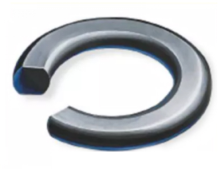
Excessive working pressure
4. Processing accuracy of the sealing device
When installing, pay attention to the processing accuracy of the sealing ring installation position to prevent barbs or sharp corners and avoid sealing failure caused by scratching the sealing ring; in addition, ensure the sealing ring installation position flatness, otherwise the sealing ring will not be able to closely fit adjacent components, affecting the sealing effect.
(Tuyuan Network)
Technical support: Guo Honghua
Editor: Liu Kangli


Online Selection

1V1 Customer Service