

Types of non-metallic seals (1)--Rubber seals
20
2024.8
Author
748
Read volume
A sealing element is a component installed to prevent gas and fluid leakage from adjacent joint surfaces. It can be divided into metal seals and non-metal seals based on raw materials.
Non-metallic seals are mainly divided into three categories according to materials: rubber, resin and graphite:
1.& nbsp; Rubber:
(1) Natural rubber (NR)
NR has good elasticity, with an elastic modulus of 3-6MPa; high mechanical strength, and the tensile strength of pure vulcanizate is 17 - 29MPa; has good air permeability resistance, water resistance, cold resistance and thermal insulation properties; has good alkali resistance, but is not resistant to concentrated strong acids; can withstand some polar solvents, but it expands in non-polar solvents, so its oil and solvent resistance are very poor; It is easy to age in the air, and the time for aging phenomenon can be prolonged by adding anti-aging agents. NR working temperature is in the range of-60℃~+80℃ and is suitable for manufacturing rubber rings and sealants.

(2) NBR
is a copolymer of butadiene and acrylonitrile, which has good wear resistance; good water and oil resistance. The higher the acrylonitrile content, the better the water and oil resistance; it has good heat resistance. The working temperature is in the range of-40 ℃ to 120 ℃, and can still be used for a short period of time at 150℃; it has good air tightness. The higher the acrylonitrile content, the better the air tightness. NBR is widely used to make sealing products, but it is not suitable for phosphate series media. It is usually used to make O-rings and oil seals, and is suitable for general hydraulic and pneumatic systems.
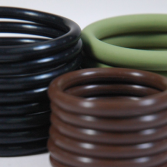
(3) Fluororubber (Europe--FKM, United States--FPM)
FKM has high tensile strength and hardness; excellent heat and temperature resistance properties, and the service temperature is-20 to 200 ℃; Good corrosion resistance, good stability to organic liquids, concentrated acids (nitric acid, sulfuric acid, hydrochloric acid), high-concentration hydrogen peroxide and other strong oxidants, superior to other various rubbers, suitable for sealing all lubricants, gasoline, hydraulic oils, synthetic oils, flame-resistant hydraulic oils and chemicals, and is widely used in metallurgy, power and other industries.
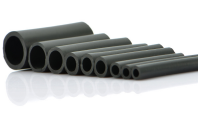
(4) Polyurethane (AU)
AU has particularly outstanding wear resistance, which is 4 times that of natural rubber; it has high strength, good tear and compression resistance; good aging resistance, oxygen and ozone resistance; good oil resistance. It is an ideal material for sealing products. Its corrosion resistance to most solvents is better than that of nitrile rubber, but it has poor water resistance and large hysteresis loss. The operating temperature is-20 to 80 ℃, which is suitable for high-pressure and high-speed system sealing in engineering machinery and metallurgical equipment.
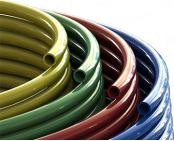
(5) Silicone rubber
Silicone rubbers include phenyl silicone rubber, fluorosilicone rubber, nitrile silicone rubber, boron silicone rubber, etc. When the phenyl content is 6% to 11%, phenyl silicone rubber has the best low-temperature properties and is still elastic at-100℃; fluorosilicone rubber has excellent oil and solvent resistance; nitrile silicone rubber has good oil resistance and solvent resistance, and has good low-temperature resistance; boron silicone rubber has good heat aging properties and can work continuously at 400℃ for several hours at a high temperature of 480℃, and still remains elastic at-62 to-40℃. Silicone rubber is suitable for high-speed rotary seals in high and low temperature environments.
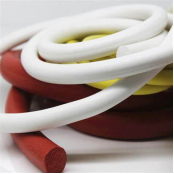
(6) Ethylene-propylene rubber (EPM: Ethylene-propylene-diene rubber, EPDM: Ethylene-propylene-diene rubber)
Ethylene-propylene rubber has very stable chemical properties and good acid and alkali corrosion resistance. It can be used to seal various polar drugs, acid and alkali solvents, and Freon and other refrigeration reagents; it has excellent aging resistance and is the best among universal rubbers; it has good impact elasticity, which can reach 50% to 60%. Among them, EPM is more stable and more difficult to process than EPDM. The service temperature of ethylene propylene rubber is between-50 ℃ and 150 ℃, and is suitable for sealing refrigeration machinery such as refrigerators.
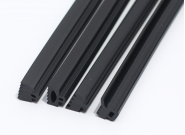
(图源网络)
技术支持:郭洪华
编辑:刘康利


Online Selection

1V1 Customer Service