

Falling resistance of screws
20
2024.8
Author
1588
Read volume
Threaded connection is a detachable fixed connection that is very common in daily life and industrial production. This is inseparable from its advantages of easy disassembly and assembly, simple structure, and very reliable fastening connection. For threaded connections, loosening failure is the most common form of failure. In order to avoid loosening failure, the United States has successfully developed drop-resistant screw anti-loosening technology. The emergence of this technology has completely solved the problem of loosening screws.
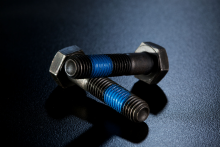
Falling resistance is one of the surface treatment methods of threads. It is to apply a layer of special engineering resin material to the threads of the screws. The pressure and its own elasticity of the engineering resin material when tightening the bolts and nuts are used to form the threads. A great friction force is generated between the threads, achieving absolute resistance to vibration and impact, thus solving the problem of preventing loosening of the threaded connection.
There are three main types of falling resistance: half circumference, opposite edge and full circumference. As shown in the figure, the range of falling resistance half circumference is 90 ° to 180 °, the range of single side of falling resistance is 60 ° to 170 °, and the full circumference of falling resistance is 360 °.

The characteristics of different types of drop-resistant processes are: half-cycle: ordinary process has a wide range of application and low cost. It is mainly used in places with less stress, especially electronic products; when connected with high torque, half-cycle drop-resistant screws are not easy to squeeze glue; for small-specification screw electric batches, eccentric abnormalities are not easy to occur.
Opposite side: The cost is close to that of half a week, and the characteristics are similar.
Full week: It also plays a certain sealing role while preventing loosening, but the cost is relatively high and is usually used for more mechanical equipment.
In addition, different colors of drop-resistant screws also have different scopes of application: blue is the sign of anti-loosening at room temperature, and it is also the most common drop-resistant color, which can be disassembled by manpower; white: PRECOTE 5 is used for sealing lower strength round or conical screw threads. The working temperature range is between-60 ° and +160 °. The coating is dry and non-viscous to prevent leakage of gas or liquid. It is highly resistant to gasoline and diesel; Yellow: PRECOTE 30 is used for medium-strength screws. The working temperature range is between-60 ° and +150 °. It can be easily disassembled under long-term high temperature conditions and has good impact resistance; red: PRECOTE 80 is used for higher-strength screws. The working temperature range is between-60 ° and +170 °. It has good high temperature resistance and impact resistance; green: PRECOTE 85 is suitable for high-strength screws. Screws with high torque and high pressure can be adjusted. The working temperature range is between-50 ° and +170 °. It has good high temperature resistance and impact resistance.
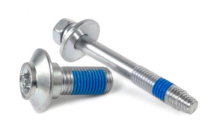
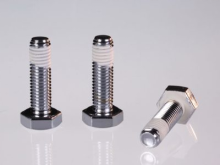
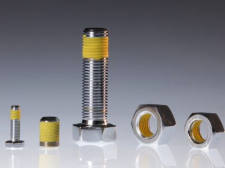
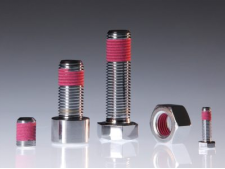
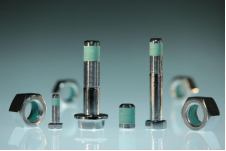
Usually, the drop-resistant glue will not be fully cured after 6 - 8 hours, so the drop-resistant locking can be repeatedly moved, replaced and adjusted without losing the tightening effect. The locking is safe, the connection is firm, and the problem of loosening of the threaded connection can be completely solved.
(图源网络)
技术支持:郭洪华
编辑:刘康利


Online Selection

1V1 Customer Service