

metal surface treatment
20
2024.8
Author
493
Read volume
The surface of metal parts needs surface treatment, not only for corrosion prevention, rust and corrosion, but also for the aesthetics of the product. There are many different forms of metal surface treatment, such as phosphating, electroplating, spraying, embossing, polishing, and wire drawing. The first three belong to the coating category. In addition to ensuring the aesthetics of the product, they can also protect the metal from corrosion; the latter three are only used as surface treatments on the physical level and do not involve any anti-corrosion effects, so in addition to stainless steel, these three surface treatments are rarely seen on other metals.
phosphating
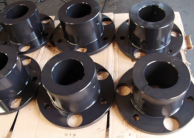
During phosphating treatment, the metal is immersed in a prepared phosphating treatment solution, and through chemical and electrochemical reactions, a phosphate chemical conversion film, also called phosphating film, is formed on the surface of the metal. The purpose of phosphating is to protect the metal from corrosion, and the metal surface after phosphating treatment can make the adhesion of the paint stronger when painting and better play an anti-corrosion role; in addition, in the metal cold processing process, phosphating treatment can also play a role in reducing friction and lubrication, and its friction coefficient is the most stable among all coatings, which is very suitable for places with high requirements for installation torque.
electroplating
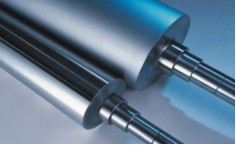
Electroplating uses the principle of electrolysis to coat a layer of other metal on the surface of a workpiece as a coating, thereby improving electrical conductivity, wear resistance, light reflection and corrosion resistance. In addition to iron-based cast iron, steel, stainless steel and some other non-ferrous metals, the plated substrate can also be non-metals, such asABS plastic, polypropylene, polysulfone and phenolic plastics, but special activation and sensitization treatment are needed before electroplating non-metals. Different plating layers have different corresponding effects. For example, gold plating is to enhance the electrical conductivity of the workpiece and improve signal transmission capabilities; copper plating is to provide a primer to improve the adhesion of the plating layer and prevent corrosion. The only disadvantage of electroplating is that its coating thickness is uneven. The coating at sharp corners is relatively thick, mainly due to the tip effect. Therefore, use caution should be used in areas where the product requires consistency of film thickness.
spraying
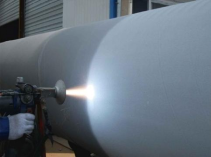
This surface treatment uses a spray gun or other tool to divide the paint into uniform and tiny droplets and spray them on the metal surface through the action of a centrifuge or gravity. The sprayed metal can obtain electrical conductivity, wear resistance, heat insulation, insulation, sealing, lubrication, acid and alkali corrosion resistance and other special mechanical and chemical properties. The most basic spraying methods during processing are air spraying, airless spraying and electrostatic spraying, but there are other derivative methods available based on these three methods. The surface adhesion of sprayed products is relatively poor, so if there are areas where adhesion requirements need to be paid attention, such as gaskets, which will have a rotating effect during installation and may scrape off the coating on the surface.
embossing
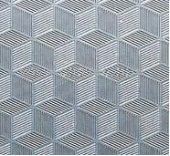
Embossing This process uses uneven molds to press patterns on the metal surface, thereby achieving an effect similar to embossed. According to the embossing method, it can be divided into: plate embossing and roller embossing.
polishing
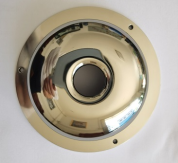
Polishing is to reduce the surface roughness by physical or chemical methods to obtain a smooth surface or mirror surface. The purpose is to better display the material and luster of the metal itself, but cannot improve the accuracy of the workpiece. Treatment methods can be divided into: ultrasonic polishing, electrolytic polishing, chemical polishing, mechanical polishing, fluid polishing and magnetic abrasive polishing. It should be noted that different methods obtain different surface roughness, and information such as cost, time, workpiece size and required surface roughness can be referred to when selecting a processing method.
wire drawing
Metal wire drawing is a surface treatment process that grinds the metal surface and finally forms lines on the surface, giving the metal surface a non-mirror-effect metallic luster, just like satin, which has a very high decorative effect. Drawn wire patterns can be divided into two categories according to the different surface effects: straight wire and random wire. For straight wire drawing, they can also be subdivided into continuous wire patterns and interrupted wire patterns.
The processing methods for wire drawing include flat pressing belt drawing (small area), nonwoven roller brush drawing (large area), wide belt drawing (flat area) and centerless grinding wire drawing (cylinder).

(Tuyuan Network)


Online Selection

1V1 Customer Service