
What is precision casting?
20
2024.8
Author
625
Read volume
Precision casting is a method of metal casting. The difference between precision casting and ordinary casting is that precision casting has higher requirements on the mold cavity, and the final casting has higher precision, and can even be used directly as a molded part.
The main process of precision casting is divided into several steps:
1.& nbsp; Design the mold with reference to the required parts;
2.& nbsp; Use the prepared mold to cast a wax mold and remove flash burrs on the surface of the wax mold;
3.& nbsp; Install the wax pattern on the tree;
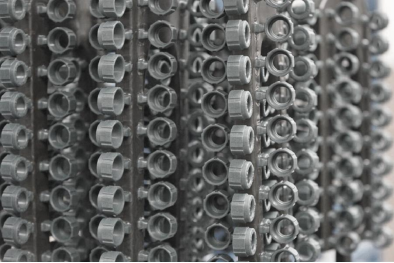
4.& nbsp; Coat the surface of the tree with industrial glue and pour sand, let it air dry to form a hard shell, and repeat it multiple times;
5.& nbsp; Heating the tree at high temperature makes the hard shell on the surface stronger and dewaxed it to obtain a mold cavity;
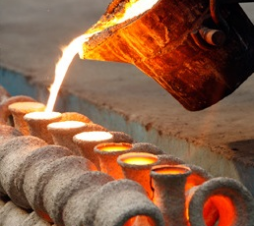
6.& nbsp; Pour molten steel or molten iron into the assembly tree, wait for it to cool and shape;
7.& nbsp; Break the outer hard shell, clean the sand on the surface of the casting, and obtain a precision casting.
Advantages of precision castings:
1.& nbsp; Parts with complex shapes can be cast with high casting flexibility;
2.& nbsp; The selection range of casting size is large, with high size accuracy and small tolerances;
3.& nbsp; A wide range of casting materials can be used to shape a variety of metal materials;
4.& nbsp; It can realize simultaneous production of large batches of castings, with short production cycles, high efficiency and high output;
5.& nbsp; Low production costs and good economic benefits;
6.& nbsp; The surface of the formed casting is smooth and smooth, with few defects and low rejection rate, reducing the amount of secondary processing;
7.& nbsp; It has a wide range of applications, such as aerospace, automobiles, natural gas, oil, firearms and many other industries.


Online Selection

1V1 Customer Service